LPG vs Natural Gas at Home
Two fuels, one question: which one feeds your stove? The lpg vs natural gas comparison is really about supply, because each fuel reaches a house by a different route. Natural gas is methane, delivered under pressure from a street network through a meter on the wall.
If we're late, $100 comes off your bill

- Licensed and InsuredEvery job done by a licensed plumber. QBCC No: 15024607
- Fixed Quote FirstFlat-rate pricing, agreed before any work starts
- Lifetime Labour WarrantyBacked by our Fix-It-or-It's-Free guarantee (T&Cs apply)
- $0 Call-Out FeesNo extra charge for nights, weekends or public holidays

LPG, short for liquefied petroleum gas, is stored as a liquid in bottles or a bulk tank and vaporises as you draw it off. Our Ferny Hills team works with both fuels, and every job is done by a licensed plumber.
Bottle supply turns up most often on larger blocks, where running a main costs more than the land is worth. Ferny Hills keeps some generous properties near its western bushland, so both setups appear around the suburb.
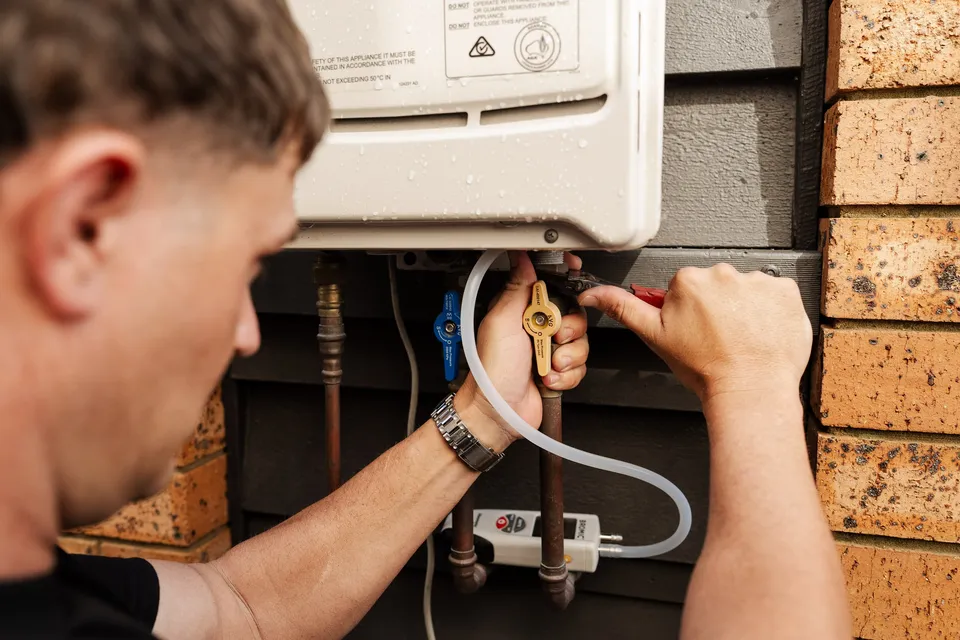
Pipe, Cylinder or Tank Supply Compared
Natural gas travels to your kitchen through a buried main and a meter; LPG is stored on the property as a liquid in bottles or a bulk tank. Reticulated LPG complicates the picture, because some streets pipe bottled fuel to homes rather than methane. So a pipe at the wall does not tell you the fuel.
Homes on a metered network get a gas meter fitted. Homes on bottled or tank LPG keep the fuel on site instead. You can read your own setup at a glance:
- Bottles or a bulk tank beside the house: the home runs on LPG.
- A meter box on the wall: a piped supply, either methane or reticulated LPG.
- The gas supplier names the fuel behind a piped connection.
Neither fuel carries colour or smell naturally. Suppliers dose both with a chemical named mercaptan, and that additive is what gives a leak its rotten-egg odour.
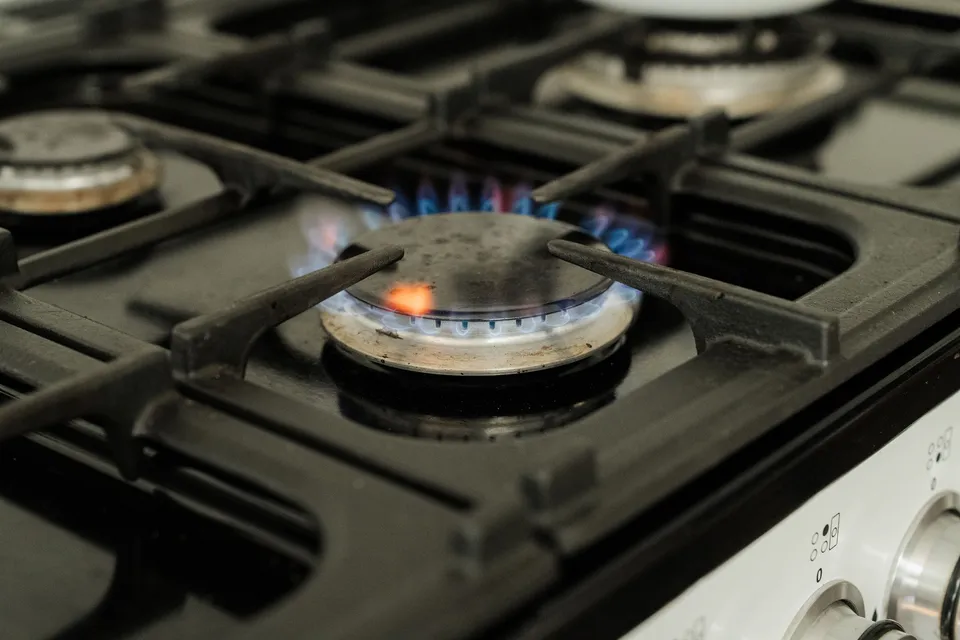
Which Gas Pools in Low Areas and Drains
Methane rises: a natural gas leak climbs and thins out in open air. LPG sinks: an escaping cloud collects in hollows, drains and other low ground, which makes a closed storage space the dangerous one.
Both fuels ignite easily, though neither poisons you directly. Fill a room with fuel gas and the oxygen goes, which brings nausea, dizziness and, at the very worst, suffocation.
Queensland's official advice on a smell matches for either fuel. Switch the appliance off, throw doors and windows open, and leave electrical switches alone. If the odour stays, close the supply at the meter for piped homes or at the bottle for LPG homes, and ring 000 when the smell persists.

Can an Appliance Run on Either Gas
No, most gas appliances are tuned for one fuel only, so a cooktop moving between a methane home and a bottle home needs a conversion first. That fuel swap counts as gas work under Queensland law.
Gas work spans installation, removal, alteration, repair, service, testing and certification of a gas system, its pipework and its connections. Only a licensed gasfitter holds the ticket to do any of it.
A few conditions frame the job:
- The gasfitter converts the appliance using parts the manufacturer supplies for that exact model.
- The finished job gets tested before the cooktop returns to service.
- Always sight the gas work licence before tools come out.
For a new cooktop on either fuel, the gas cooktop installation page sets out what that job involves.

What the Rules Say About Gas Cylinders
A portable barbecue bottle, typically 9 kg, holds a test stamp good for ten years, and refillers check that date on each cylinder they fill. Once the stamp lapses, the cylinder goes for testing or retirement.
The carrying and storage rules apply at home as much as on the road:
- Restrain cylinders when driving, and keep them out of the cabin where people sit.
- Use and store each cylinder in open, breezy conditions, clear of heat and sparks.
- Give spare bottles one secure set-aside spot of their own.
- Keep the valve closed and sealed between uses, empty cylinders included.
Where a cylinder stays connected to the supply, the LPG distributor looks after testing and maintenance on that cylinder. A gas odour or a damaged bottle means phoning the distributor rather than fixing anything yourself. Cylinder valves are never a home repair or removal job.
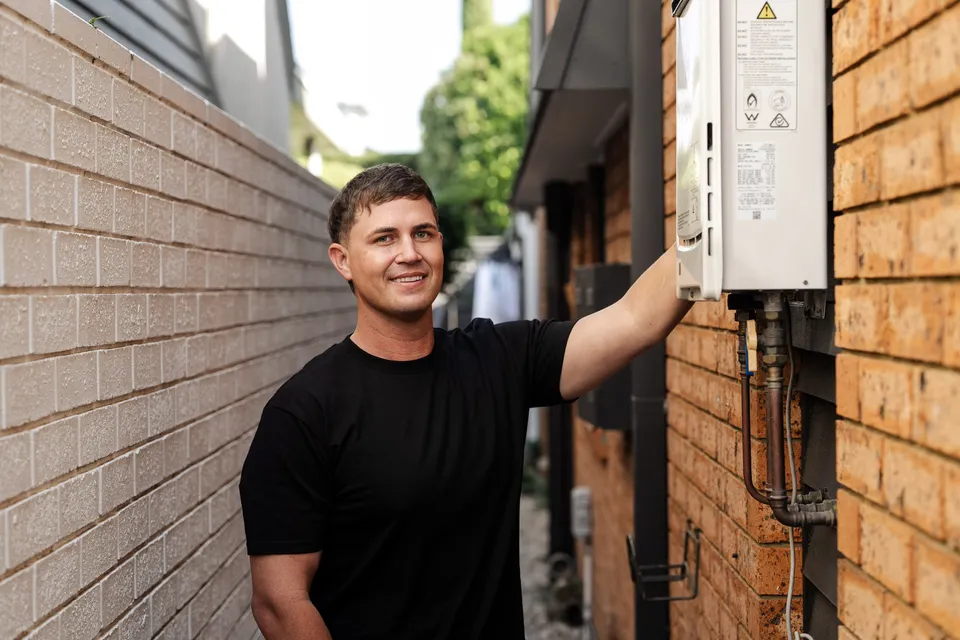
When to Call a Plumber
Any gas task belongs with a licensed gasfitter: fuel conversions, new appliances, mystery odours, connections needing a test. Cookers and barbecues also earn a periodic service by a licensed gasfitter and should run per the maker's instructions.
Digging adds a second reason to ring first. On blocks built before the 1974 sewer, excavation for a pool or retaining wall can hit a buried septic tank or old absorption trench, so old plans deserve a look before anyone breaks ground near gas runs.
Gas Questions From Ferny Hills Homes
Call (07) 3523 6484How can I tell if my Ferny Hills home uses LPG or natural gas?
A bulk tank or bottles on the property mean LPG. A meter on the wall means a piped supply, which could carry methane or reticulated LPG, so the gas supplier confirms your fuel.
What does the 10-year stamp on a gas cylinder mean?
The stamp is the cylinder's test date. A refill station fills a 9 kg barbecue bottle only while that stamp sits within ten years, and each cylinder's date gets checked before any filling happens.
How should I store a spare gas cylinder at home?
Spares belong in one secure set-aside spot with airflow, clear of heat and ignition sources. Keep each cylinder standing and restrained, with its valve shut and sealed whenever the bottle sits idle, empty ones included.
Who looks after an LPG cylinder at my Ferny Hills home?
Any connected cylinder is maintained and tested by the LPG distributor. Ring the distributor if you smell gas or spot damage to the bottle, and leave cylinder valves alone; repairing or removing one is never a home job.

Call Us About Any Gas JobWe'll call you back.
Book on (07) 3523 6484 for plumbing anywhere in Ferny Hills. We're available 24/7, there's no extra charge for nights, weekends or public holidays, and every job comes with $0 call-out fees.
To claim your $0 call-out fee, call (07) 3523 6484 today.